A five-star NABERS first
COMMERCIAL
We use cookies.
Cookie Settings
We use cookies on our website to give you the most relevant experience by remembering your preferences and repeat visits.
Strictly Necessary
Necessary cookies are absolutely essential for the website to function properly. These cookies ensure basic functionalities and security features of the website, anonymously.
Analytical or performance
Analytical cookies are used to understand how visitors interact with the website. These cookies help provide information on metrics the number of visitors, bounce rate, traffic source, etc.
Functionality or appearance
Functional cookies help to perform certain functionalities like sharing the content of the website on social media platforms, collect feedbacks, and other third-party features.
No results found
COMMERCIAL
Client
Location
Size
Status
Sector
Discipline
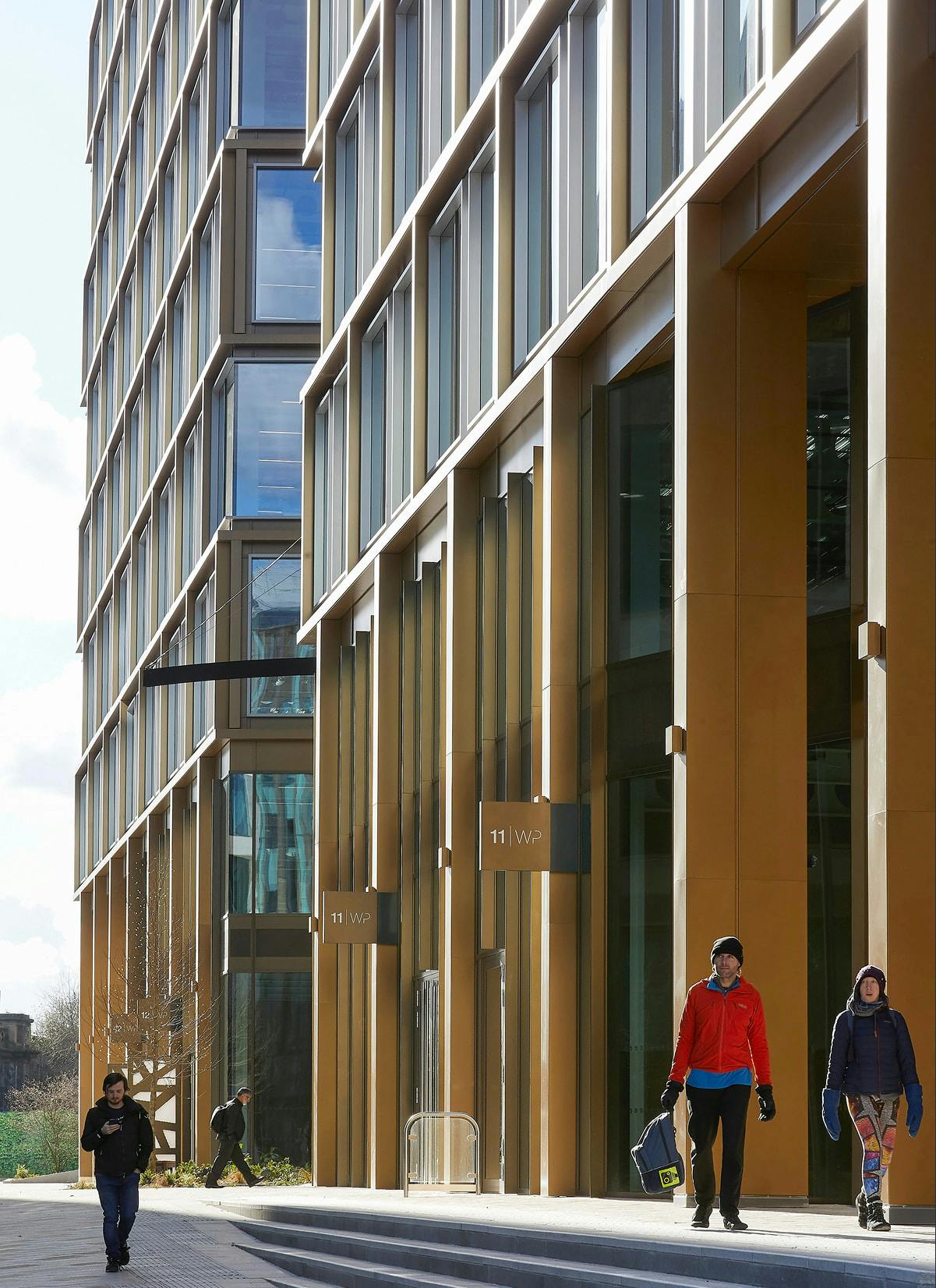
The development of cutting-edge offices 11 & 12 Wellington Place has brought new commercial confidence to the West End of Leeds. The latest addition to the Wellington Place estate for MEPC combines workplace innovation with sustainability, becoming the first development outside London to secure a five-star NABERS ‘Design Reviewed Target Rating’.
The buildings’ high-performance envelope, air source heat pumps and 500sqm of solar PV cut operational energy by 41% against the UK office average.
Andrew Leaver, Director
You must accept functionality cookies to view this content.
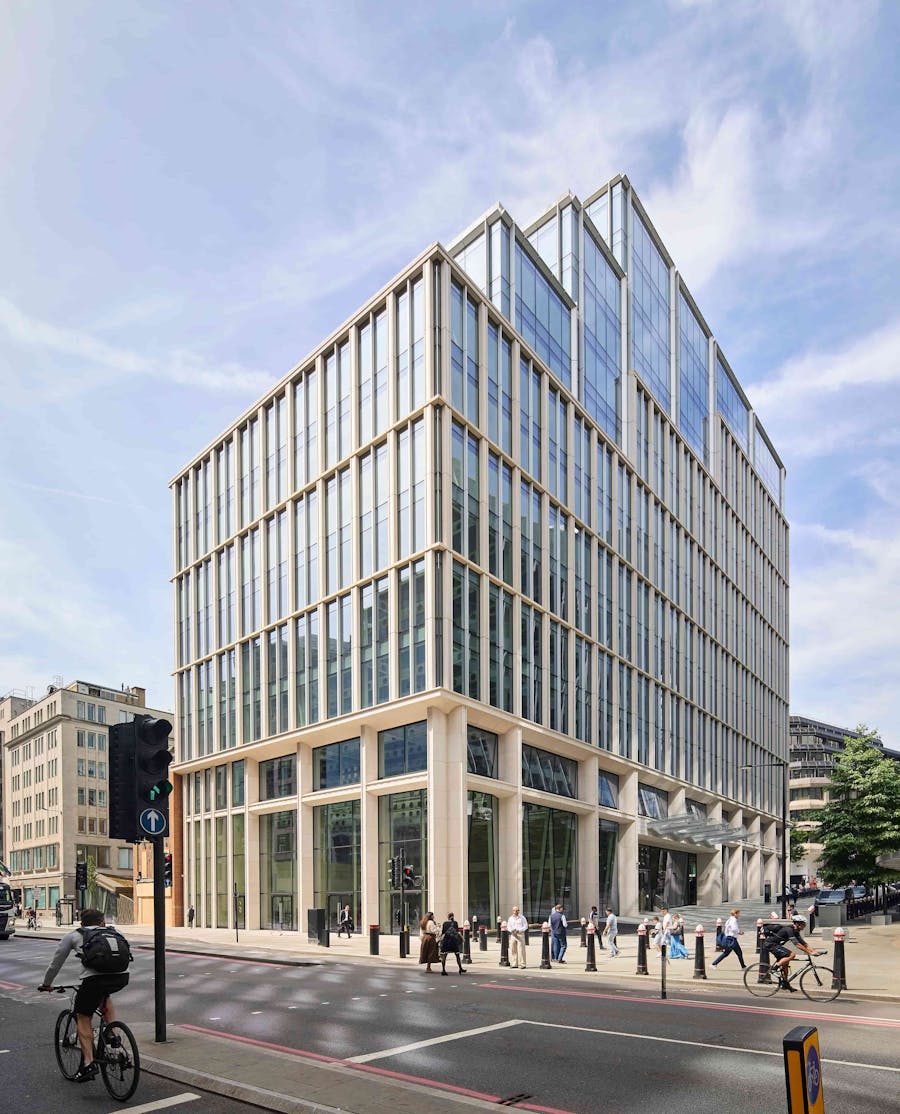
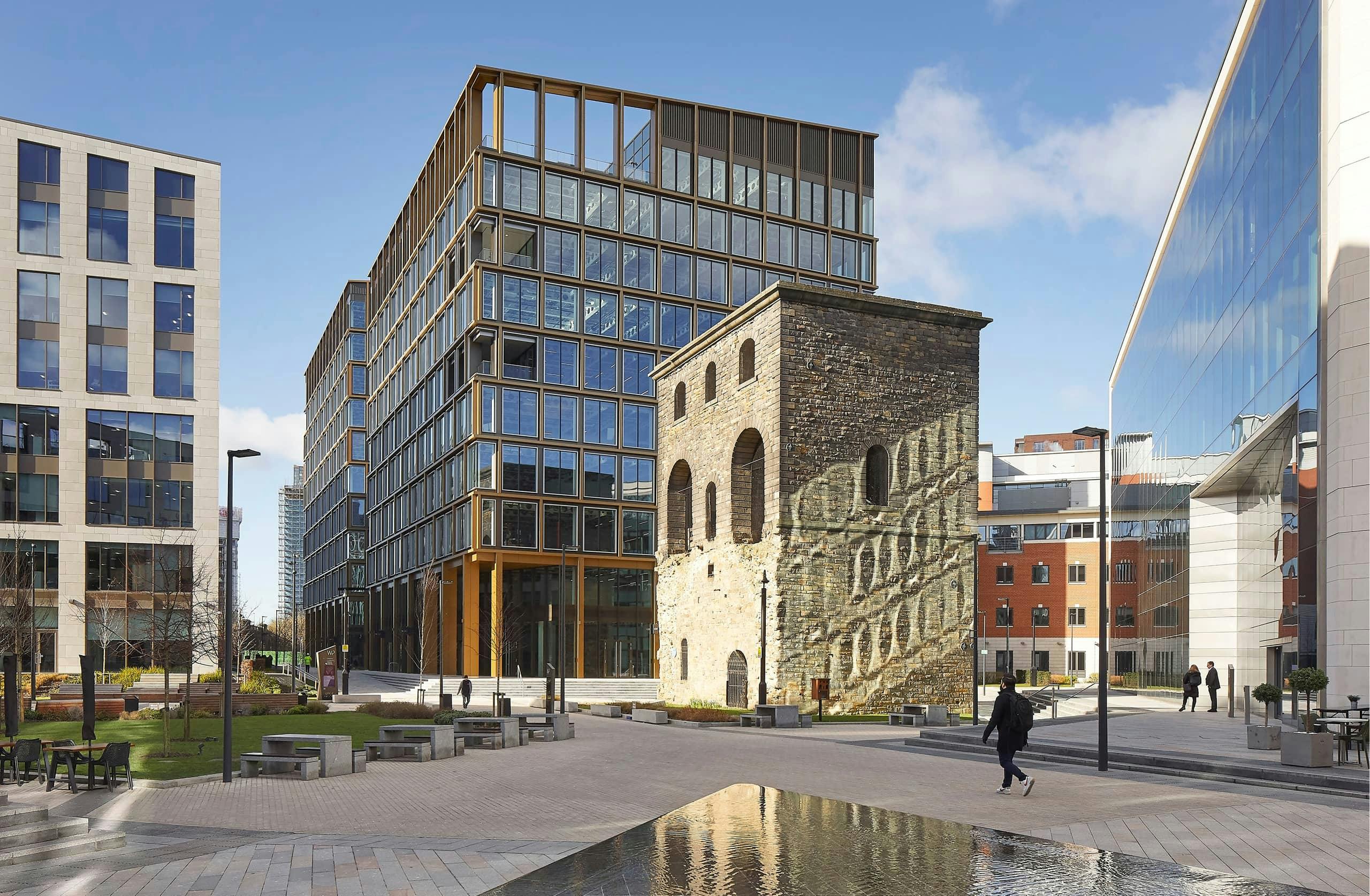
The pair of 12-storey office buildings designed by TP Bennett forms the centre of the evolving Wellington Place estate in the West End of Leeds.
Developed by MEPC as part of a programme of regeneration projects across regional UK cities, the scheme builds on a long-term masterplan that has incrementally reshaped this neighbourhood into a successful business community within easy reach of the railway station.
The two buildings are linked by a glass bridge, allowing flexible occupation while maintaining a clear identity for each. In their details, the design references the Grade II-listed lifting tower to the east and an historic viaduct to the west; facades are clad in a bronze grid, overlaid with a finer silver secondary frame to create a sense of depth, in tones evocative of industrial steel.
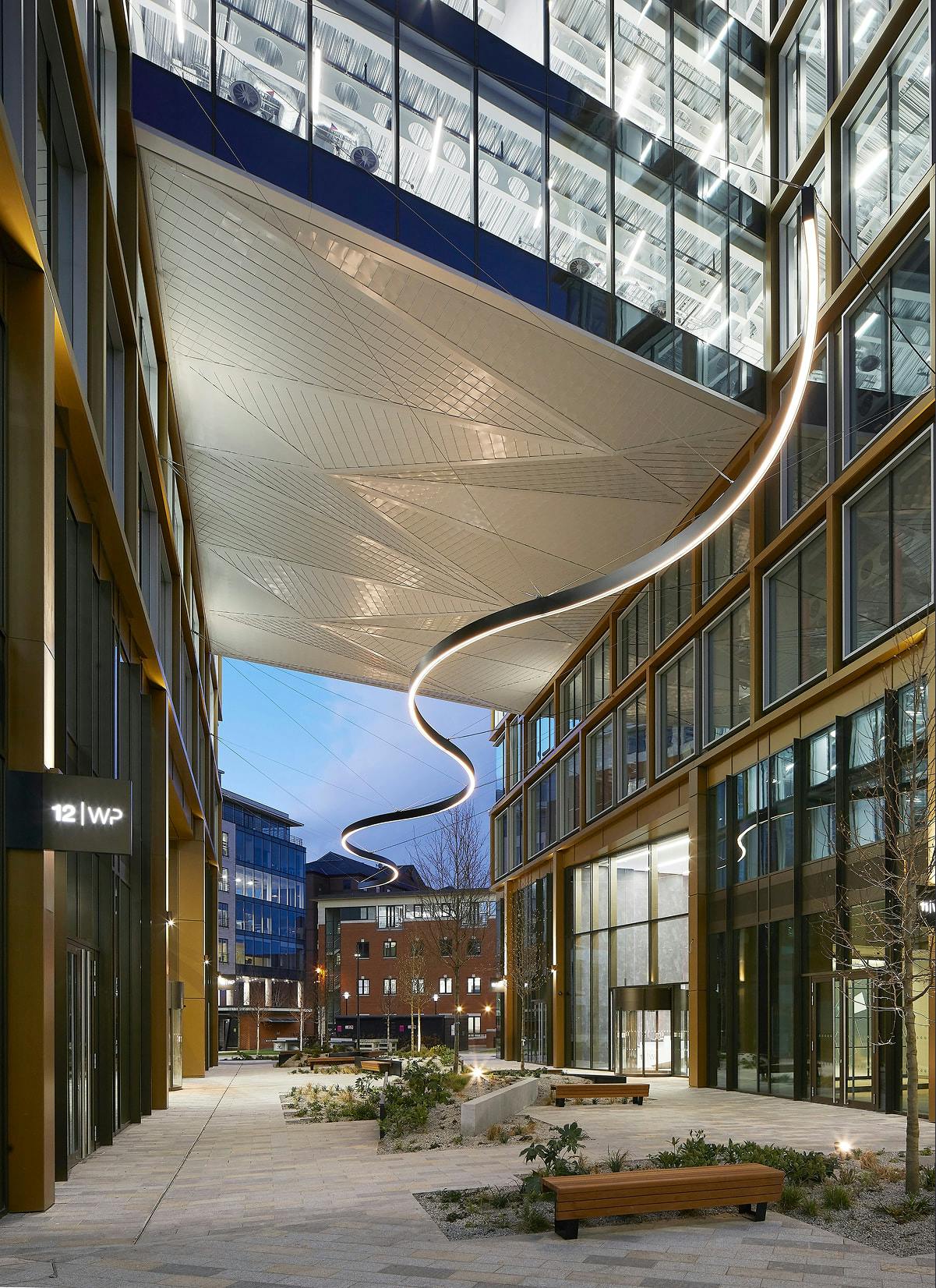
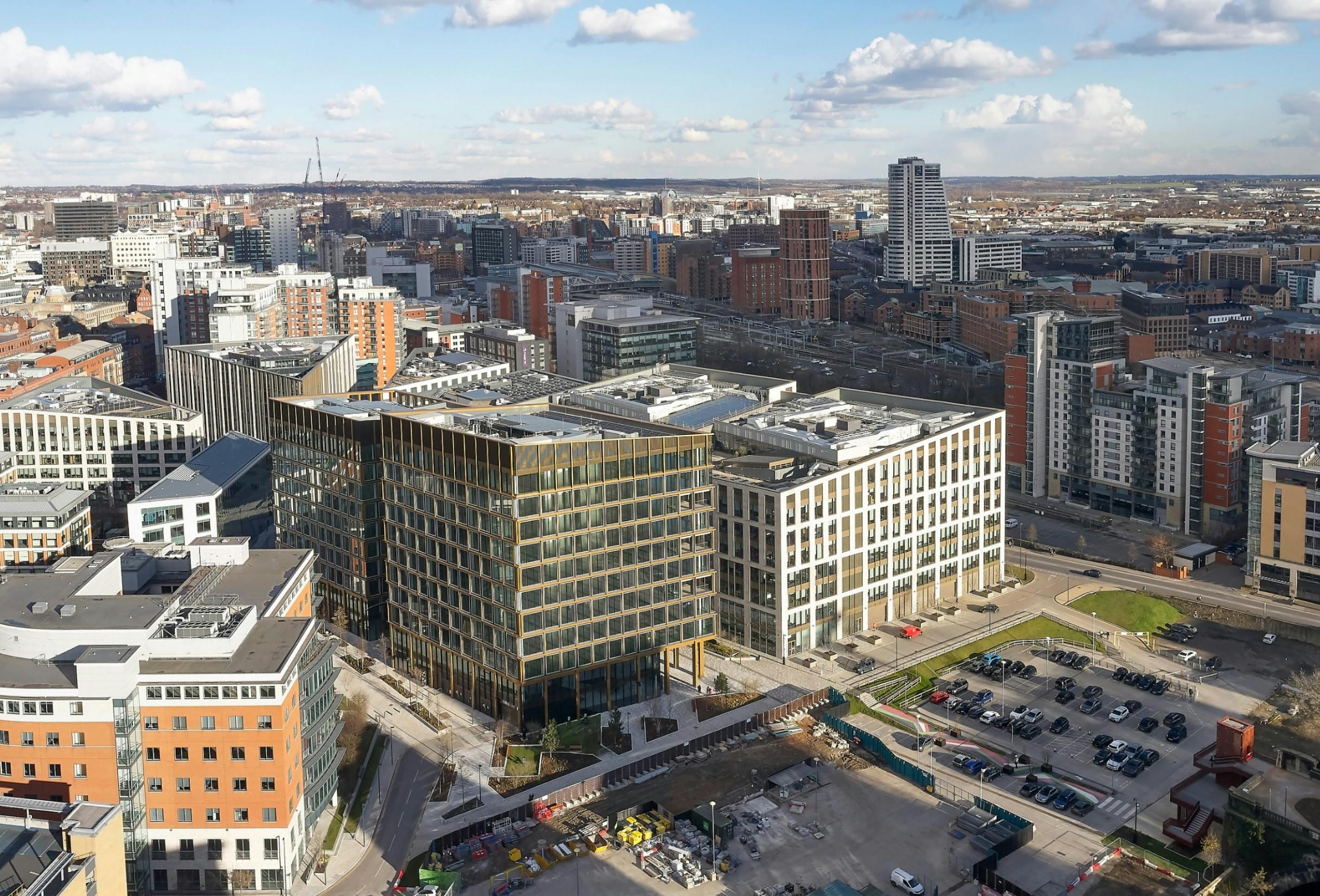
The massing slopes gently towards the centre of the estate, enhancing views and framing the landscaped public space below. Inset terraces step up at alternate corners, while expansive ninth and tenth floor roof gardens provide city views.
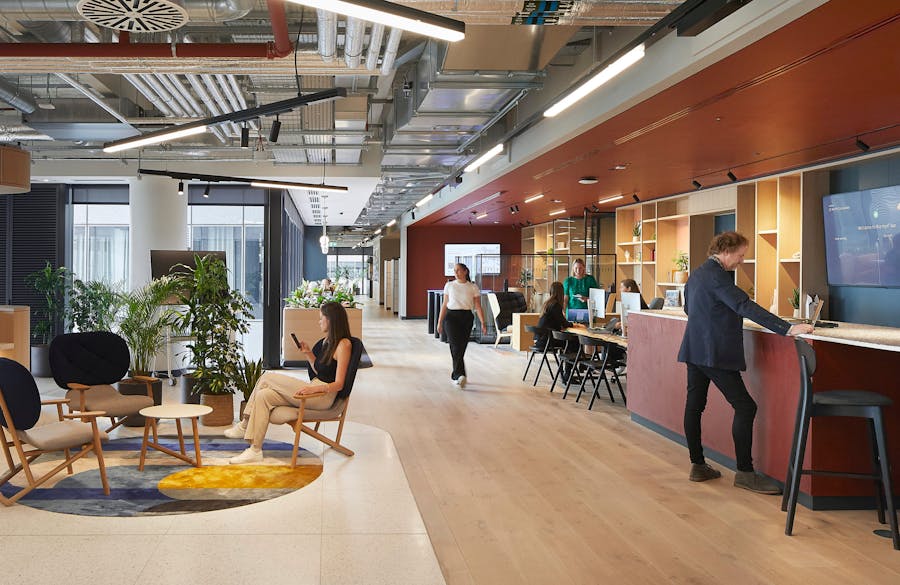
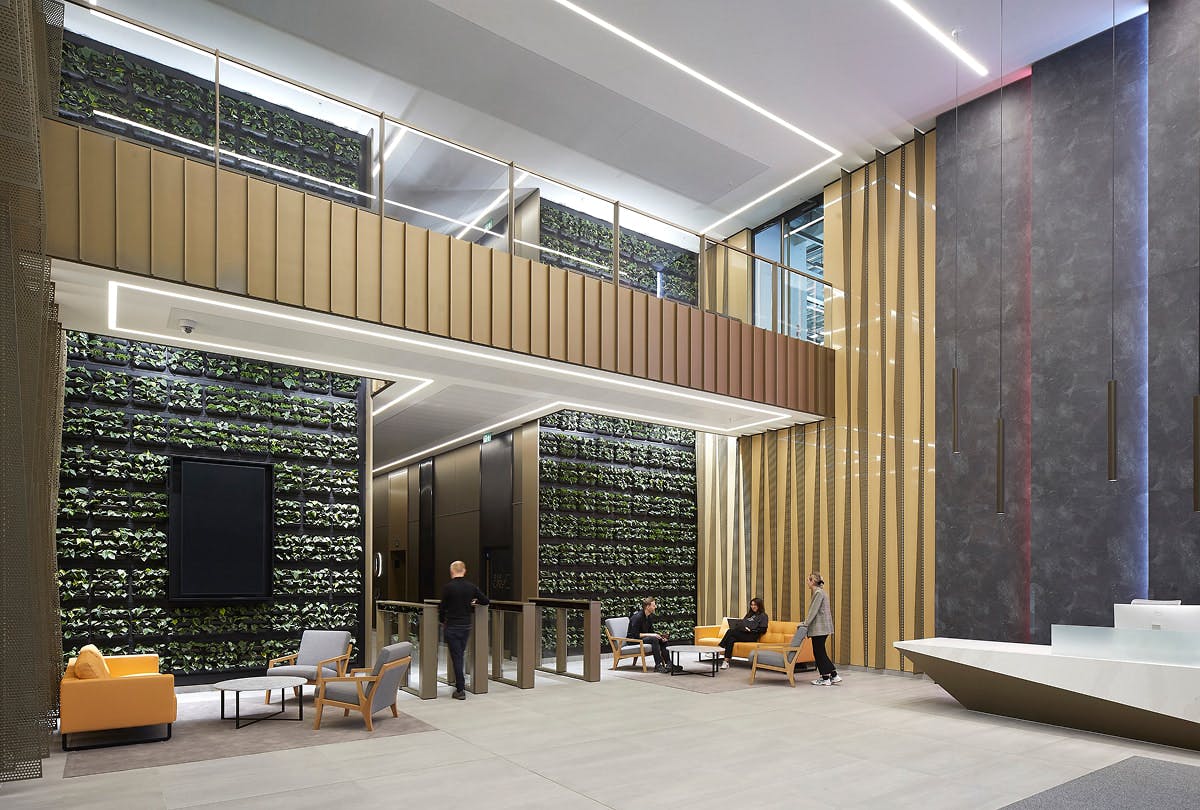
Internally, the ground to third floors can operate independently with central cores, while the level four link allows floors to be either combined for a single occupier or subdivided for multiple tenants. As it has been developed speculatively, the Cat A office is also designed to minimise disruption during future fit-outs. The double-height reception spaces are animated by green walls and first-floor walkways and the ground floor incorporates retail, a large gym, cycle spaces, showers and lockers.
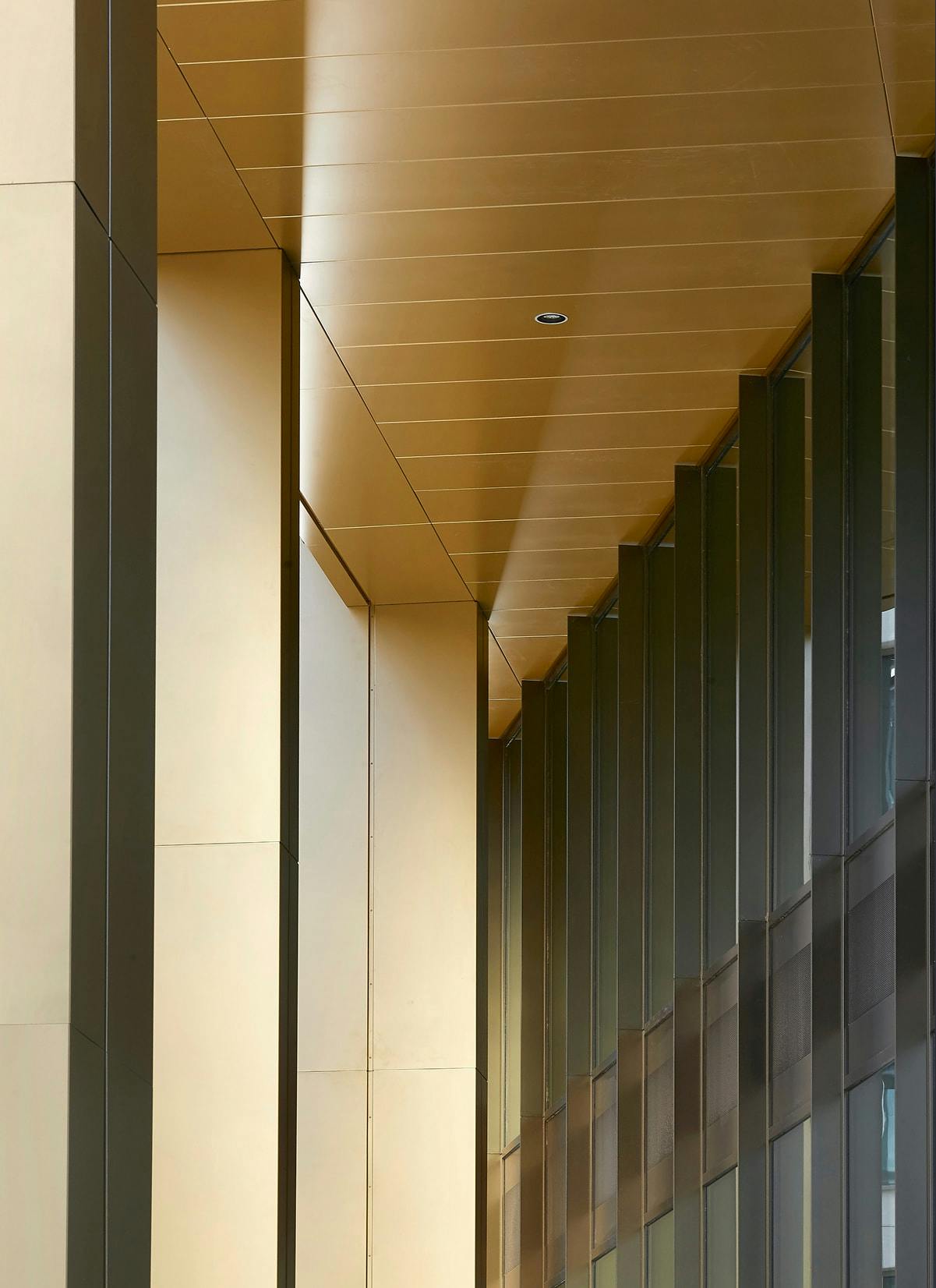
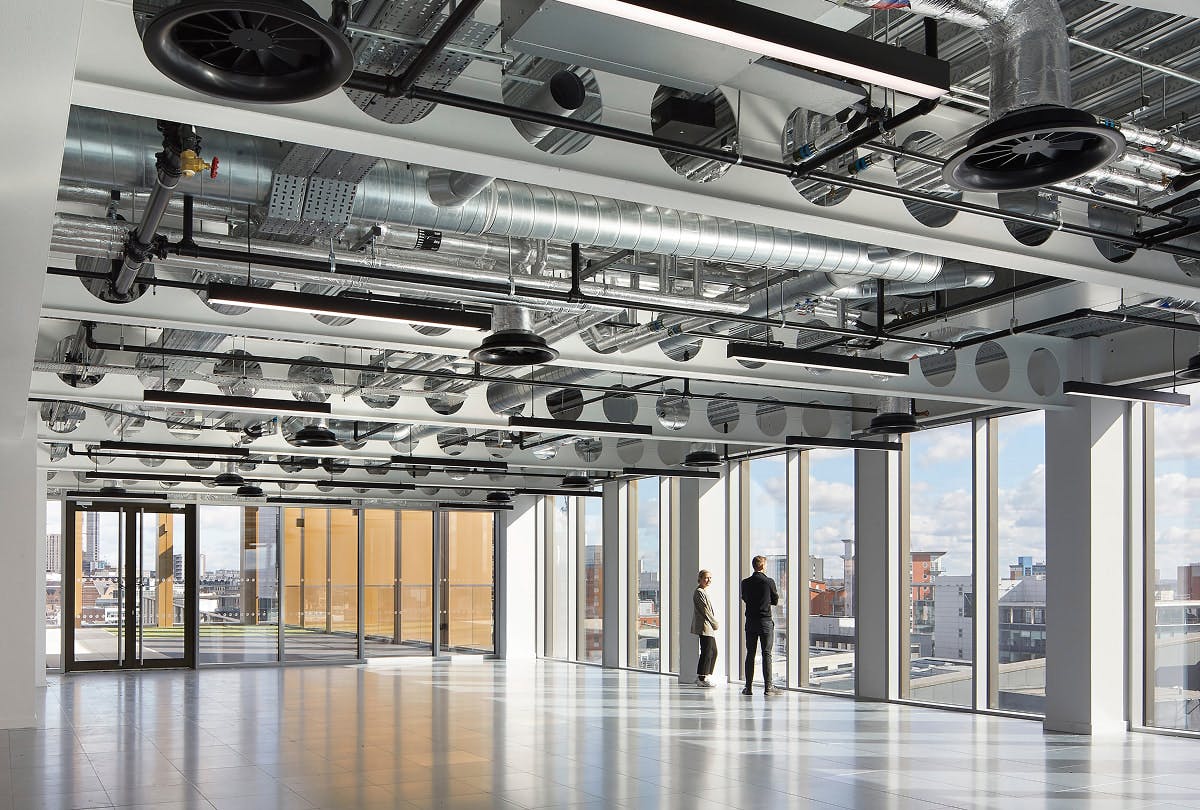
Sustainability is a driving principle and the facade incorporates solar-control, low-emissivity triple glazing and shading, with power generated by air source heat pumps supported by rooftop photovoltaic panels. The target operational energy use of no more than 43 kWh/m² per year (NLA) represents a 41% reduction compared with the UK office average – an estimated annual saving of 407 tonnes of CO₂. Outside, the six acres of regenerated public space have brought 47 new trees, biodiverse planting, vegetable patches, fruit trees and beehives.
In this way, the project supports Leeds in both its economic and sustainable growth ambitions, as Councillor James Lewis, leader of Leeds City Council explained: “Wellington Place has been a real success story for our city… [It] can only strengthen Leeds’s credentials as a world-class business powerhouse, while also helping to create jobs, drive regeneration and support inclusive growth in a way that benefits people and communities right across the city.”